Best Walking Pad for Heavy People: 300+ lbs Capacity (2026)
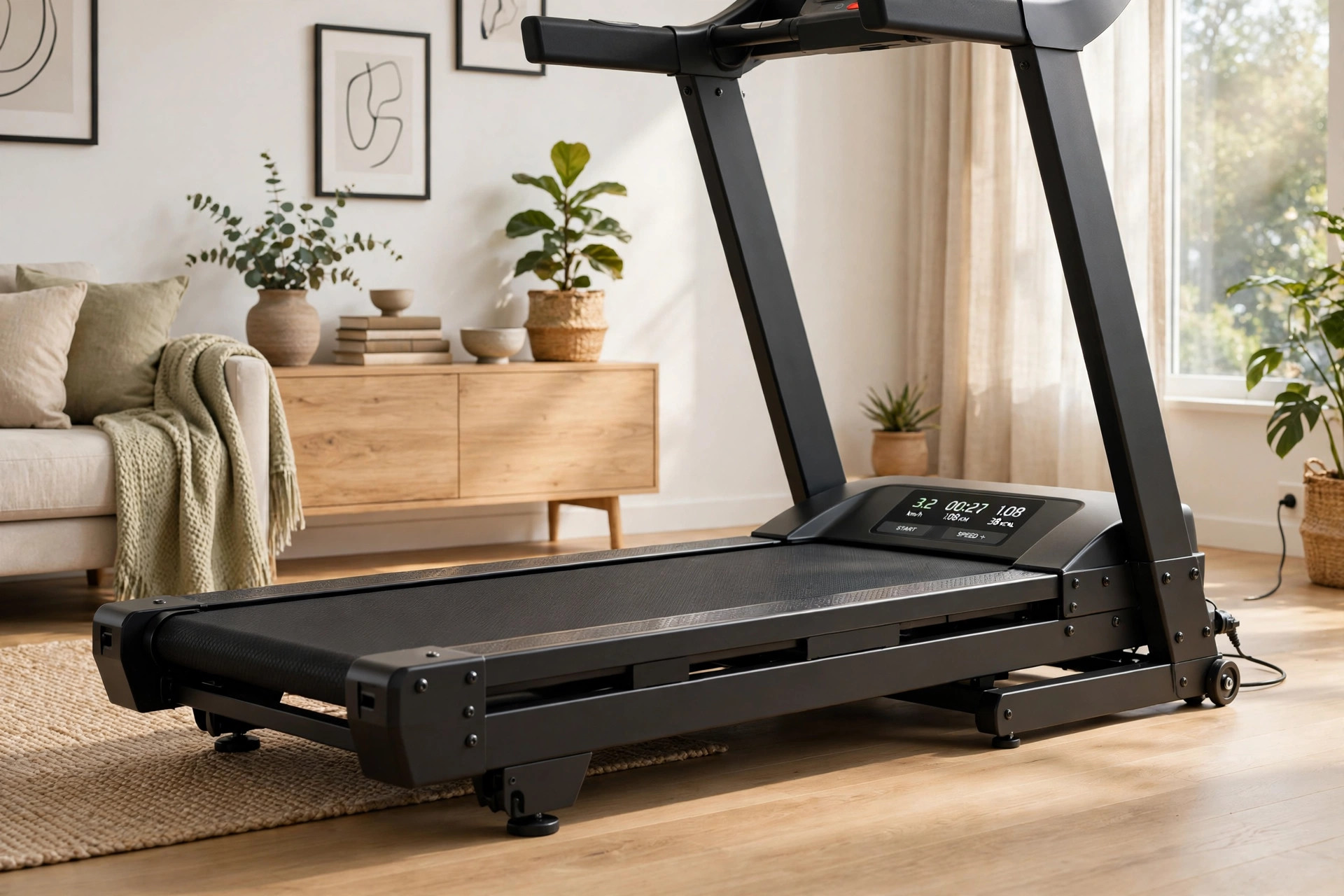
Most walking pads top out at 220–265 lbs of rated capacity. If you weigh more than that, the standard roundups do not apply to you. A pad run near its limit works harder, runs louder, and wears out sooner. The five pads below are all rated for 300 lbs or more, ranked on what keeps a pad running well under load: motor power, belt size, and frame construction.
Capacity ratings deserve skepticism. Some brands print an optimistic number on the box and a lower one in the manual. We note where sources conflict. Prices below are typical US street prices seen in 2026.
Quick picks
- Highest capacity: MERACH UltraWalk W60 Plus — 400-lb rating, 12% auto incline, 16.5″ wide deck, ~$280–$400.
- Best budget: DeerRun Q1 Classic Pro — 300-lb rating, ~$188, reviewed by TechRadar and TreadmillReviews.
- Best incline at 300 lbs: DeerRun 12% Auto Incline — 3.0 HP motor, powered incline, 300-lb rating.
- Best mid-range value: Yemsd 3-in-1 — 330-lb rating, 2.5 HP, 37″ belt, ~$130–$200.
- Best motor brand: Cybergoing T10 — Bosch motor, fixed 7% incline, 300-lb rating.
Comparison table
| Model | Capacity | Motor | Belt size | Top speed | Price |
|---|---|---|---|---|---|
| MERACH UltraWalk W60 Plus | 400 lbs | 1.25 CHP / 3.5 HP peak brushless | 41.3″ × 16.5″ | 4.0 mph | ~$280–$400 |
| DeerRun Q1 Classic Pro | 300 lbs | Brushless (HP not published) | ~39.4″ × 15.4″ | 3.8 mph | ~$188 |
| DeerRun 12% Auto Incline | 300 lbs | 3.0 HP | 35.43″ × 15.94″ | 3.8 mph | Check current price |
| Yemsd 3-in-1 | 330 lbs | 2.5 HP | 37″ × 15″ | 3.8 mph | ~$130–$200 |
| Cybergoing T10 | 300 lbs | Bosch, 2.5 HP performance | 36″ × 15″ | 4.0 mph | Check current price |
Capacity and motor figures come from manufacturer listings and independent reviews linked in each section. Where sources conflicted, we used the more conservative figure.
What weight capacity ratings mean
1. The rating is a ceiling, not a target
A 300-lb rating means the manufacturer tested the pad with a 300-lb load. Motors work harder as load rises. A pad carrying 280 lbs on a 300-lb rating runs closer to its thermal limits than the same pad carrying 200 lbs. If your weight sits within 10–15% of the rating, step up to the next capacity tier for longer motor life and quieter operation.
2. Motor power matters more than the rating alone
Two pads can share a 300-lb rating with very different motors. Continuous horsepower (CHP) tells you what the motor sustains. Peak HP is what it hits for a few seconds. A 1.25 CHP brushless motor, like the MERACH W60's, sustains load better than a generic 2.5 HP peak-rated motor with no CHP figure published.
3. Belt width affects stability, not just comfort
Narrow belts force a narrower stance. At higher body weights, a wider belt gives more lateral room and a more planted feel. The MERACH's 16.5-inch deck is the widest here. Most pads in this roundup run 15 to 16 inches wide. Below 15 inches, heavier walkers tend to feel constrained.
4. Frame weight is a quiet signal of build quality
Manufacturers rarely publish frame thickness. They do publish product weight. A 67.7-lb frame (MERACH W60) contains substantially more steel than a 38.7-lb one (Yemsd).
Full reviews
MERACH UltraWalk W60 Plus
The W60 Plus is the only walking pad here rated for 400 lbs, and the specs back it up. The 1.25 CHP brushless motor is the strongest continuous-duty rating in this roundup. The 67.7-lb steel frame is nearly twice the weight of budget pads. The 16.5-inch deck is the widest available in the category.
It launched in May 2026, so long-term reliability data does not exist yet. Early hands-on reviews praise the stability and quiet operation around 53.6 dB. The list price sits near $330–$500 depending on the retailer, with deal codes dropping it lower at times.
- 400-lb rating with the motor and frame to support it
- Widest deck here at 16.5 inches
- 12% auto incline with 12 levels
- Quiet in early testing (~53.6 dB)
- Launched May 2026 — no long-term durability record
- Heavy at 67.7 lbs; less portable
- Price swings with deal codes
The strongest pick for anyone over 300 lbs. The capacity rating is backed by real motor and frame specs, not just a printed number.
Prices change frequently — the button checks the live price.
DeerRun Q1 Classic Pro
The Q1 Classic Pro is the cheapest credible 300-lb walking pad, and it has something most budget pads lack: independent reviews. TechRadar measured the belt at roughly 39.4 × 15.4 inches and confirmed the 300-lb rating. TreadmillReviews ran one for six months and found it the quietest budget pad in their test group.
The motor's horsepower is not published, which is the main gap in the spec sheet. TreadmillReviews recommends capping daily use at one to two hours of light walking. DeerRun includes a 60-day trial and one-year warranty. At ~$188, it costs less than half the MERACH while meeting the 300-lb bar.
- 300-lb rating at a ~$188 price
- Independently reviewed by TechRadar and TreadmillReviews
- 60-day trial and one-year warranty
- Quiet for the price in testing
- Motor HP not published
- Best for 1–2 hours of daily use, per reviewers
- No incline
The value pick at 300 lbs. Independent testing backs the rating, and the trial period covers the main risk.
Prices change frequently — the button checks the live price.
DeerRun 12% Auto Incline
This is DeerRun's answer for heavier users who want incline training. The 3.0 HP motor is a published figure, which is more than most listings in this price tier disclose. The 12% auto incline adjusts across three levels from the remote or the PitPat app.
The belt is shorter than the Q1 Classic Pro's at 35.43 inches. The unit weighs 51.6 lbs, reflecting the incline hardware. We could not verify a stable street price at publication, so use the button below for the current number.
- Published 3.0 HP motor with 300-lb rating
- Powered 12% incline — rare at this capacity
- Five-layer belt with shock absorption
- Shorter 35.43″ belt
- Heavier at 51.6 lbs
- Price not verified at publication
The incline option for 300-lb users. The published motor spec inspires more confidence than unlisted ones.
Prices change frequently — the button checks the live price.
Yemsd 3-in-1 Walking Pad
The Yemsd sits between the DeerRun budget tier and the premium MERACH on capacity: 330 lbs with a published 2.5 HP motor. The 37-inch belt splits the difference on length. A safety key stops the belt in an emergency.
Street prices move a lot, with ~$130–$200 the typical range in 2026. It is a white-label style product, so long-term support depends on the seller. Buy from a listing with solid return terms.
- 330-lb rating above the 300-lb floor
- Published 2.5 HP motor
- Safety key included
- Often the cheapest 330-lb option
- White-label product; support varies by seller
- Price fluctuates widely
- Thinner review coverage than DeerRun
The cheapest way past 300 lbs. Fine for moderate daily use; buy where returns are easy.
Prices change frequently — the button checks the live price.
Cybergoing T10
The T10's selling point is the motor. Bosch manufactures it, which is unusual in a category full of anonymous motors. A branded motor does not guarantee longevity. It does mean the component comes from a company with a reputation to protect.
The incline is fixed, so every walk is an uphill walk. The 15 × 36-inch belt is on the smaller side. Multiple review sites list it as a heavy-user pick, and the 12-month warranty is standard. We could not verify current pricing at publication.
- Bosch motor — rare brand accountability in this category
- Fixed 7% incline with nothing to break
- App plus remote control
- Fixed incline; no flat option
- Smaller 15″ × 36″ belt
- Price not verified at publication
Buy it for the Bosch motor. The most repairable-feeling option here if long service life is the priority.
Prices change frequently — the button checks the live price.
Frequently asked questions
Can a 300-lb person use a walking pad safely?
Yes, on a pad rated for your weight. Use a model rated at or above your body weight, start at low speeds, and keep sessions moderate while you learn the machine. Every pad in this guide carries a 300-lb or higher rating. Check with a healthcare professional before starting if you have a heart condition or joint issues.
What happens if you exceed a walking pad's weight limit?
Running over the rated limit stresses the motor and belt. The motor runs hotter, the belt can slip or stall, and wear accelerates. Most pads have overload protection that cuts power, which feels like the belt suddenly stopping.
Is a higher weight capacity always better?
Higher capacity usually means a stronger motor and sturdier frame, which benefits any user. The tradeoff is weight and price. A 400-lb pad weighs more and costs more than a 300-lb one. Match the rating to your needs with some headroom rather than buying far above it.
Do heavier users need a wider belt?
Width helps. A 16-inch or wider belt gives more lateral room and feels more stable than a 14-inch one. Length matters too, and it depends on height more than weight. At 6 feet or taller, look for 40 inches of belt or more regardless of capacity.
Should heavier users get a treadmill instead of a walking pad?
It depends on the workout. For walking at a desk or around the house, a 300-lb-plus pad is enough. For running, steep incline training, or anyone who wants handrails for balance, a full treadmill is the better tool. Our comparison guide walks through the decision.
Prices move. We check regularly but the checkout number may differ. Specs marked * varied by source at publication. See our affiliate disclosure for how we fund the research.