Best Walking Pad with Incline: 5 Models Worth the Extra Money (2026)
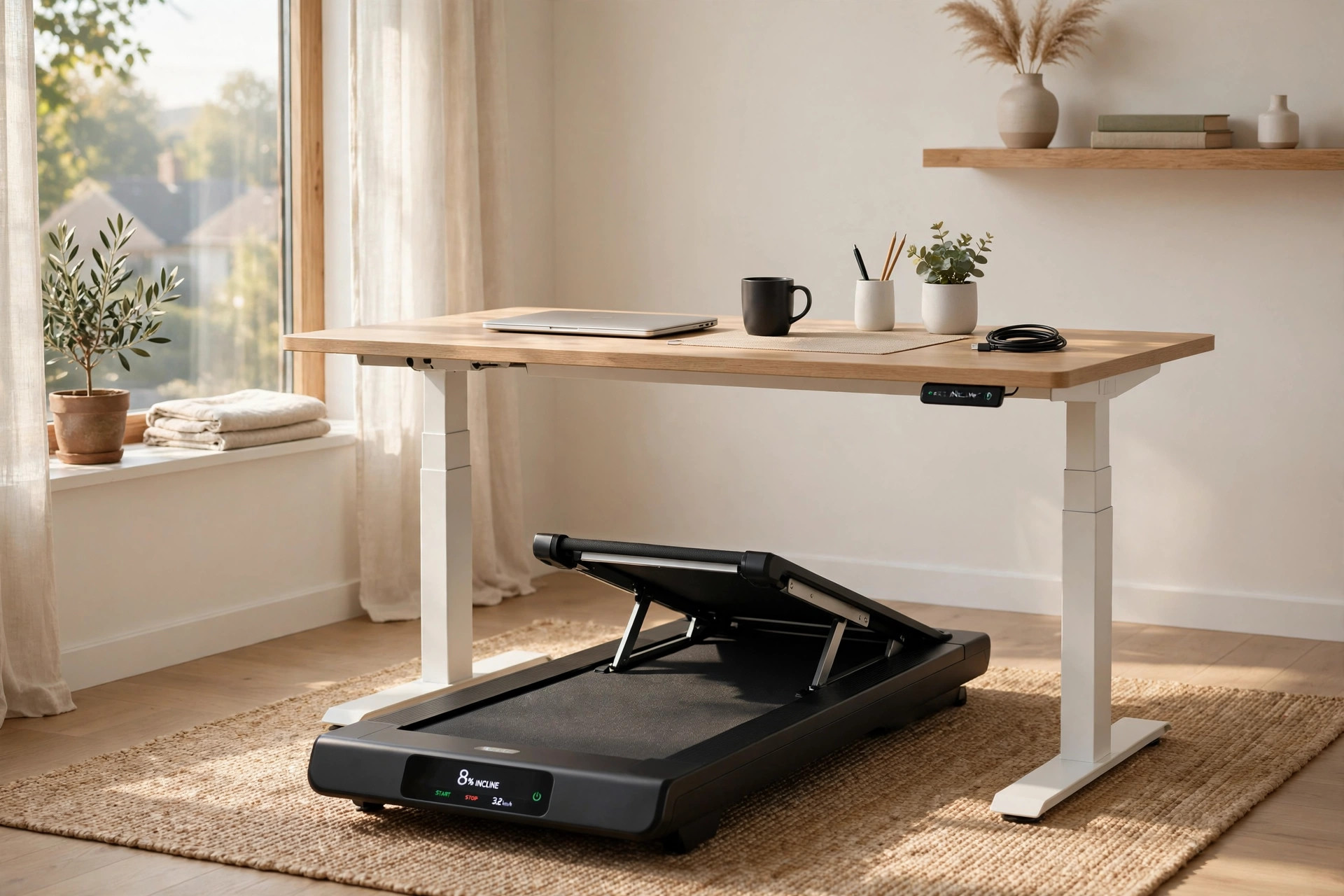
A flat walking pad gets you steps. An incline walking pad gets you a workout. Raising the belt to even 5% increases calorie burn noticeably without asking you to walk faster or longer, which matters when your walking time is capped by your workday.
Incline used to mean buying a full treadmill. That changed. Compact walking pads now ship with fixed 5% grades, manual multi-level incline feet, or powered auto-incline up to 15%. We compared five incline walking pads worth the premium in 2026, ranked by incline range, weight capacity, noise, and whether the incline mechanism actually holds up under daily use.
Quick picks
- Best for under-desk use: Egofit Walker Pro M1. Fixed 5% incline, smallest footprint in the category, ~$399.
- Best auto-incline overall: 12% auto-incline walking pad. Nine powered levels to 12%, 450 lb capacity, app-connected.
- Steepest climb: Lontek 15% incline walking pad. Manual flat/10%/15% settings, handles included, 350 lb capacity.
- Best for intervals: Fousae 10% incline walking pad. Twelve HIIT programs, quiet 2.75HP brushless motor.
- Best for stability: Wellfit auto-incline walking pad. Extended handrails, 12% powered incline, 375 lb capacity.
Comparison table
| Model | Incline | Top speed | Weight capacity | Motor | Price |
|---|---|---|---|---|---|
| Egofit Walker Pro M1 | Fixed 5% | 3.1 mph | 220 lbs | 2.0 HP | ~$399 |
| 12% auto-incline pad | 0–12% powered, 9 levels | 4.0 mph | 450 lbs | 2.5 HP | ~$400–$500 |
| Lontek 15% incline | Flat / 10% / 15% manual | 6.2 mph | 350 lbs | 3.0 HP brushless | ~$350–$450 |
| Fousae 10% incline | 10% powered | 4.0 mph | 350 lbs | 2.75 HP brushless | ~$300–$400 |
| Wellfit auto-incline | 0–12% powered, 6 levels | 4.0 mph | 375 lbs | 3.5 HP | ~$450–$550 |
Prices are typical US street prices observed in 2026 and move with sales. "Claimed" noise figures come from manufacturer listings; independent testing often reads higher.
How to choose an incline walking pad
Incline type matters more than the maximum grade number. Fixed incline (like the Egofit's 5%) is always on. You get the calorie benefit on every step with zero mechanism to break, but you cannot flatten the belt for easy recovery walks. Manual incline uses flip-down feet or leg adjustments. It costs less and has nothing electronic to fail, though you have to step off to change it. Powered auto-incline adjusts from the remote or app mid-walk. It is the most convenient and the most expensive, and the lift motor is one more part that can wear out.
Match the incline to your use case. Under-desk walkers should favor modest fixed or low auto-incline. Anything above 8% gets hard to sustain while typing. Dedicated workout walkers who use the pad away from the desk can use the full range. If you plan to jog on incline, check that the model supports it. Many walking pads cap walking speed at 4 mph and only allow higher speeds on flat settings.
Weight capacity deserves extra attention on incline models. The lift mechanism adds stress to the frame. A 450 lb rated capacity on an auto-incline model suggests a sturdier build than the same rating on a flat pad. Treat manufacturer capacity as a ceiling and stay comfortably under it for daily incline use.
Noise is the hidden cost of incline. Lift motors add a whir on top of belt noise, and steeper grades make foot strikes louder. If you take calls while walking, look for brushless motors and treat sub-45 dB claims as best-case. Real-world noise at incline is usually 5–10 dB above the flat rating.
Full reviews
1. Egofit Walker Pro M1 — best for under-desk use
The Egofit Walker Pro M1 is the smallest walking pad with incline you can buy. Its 5% grade is fixed into the frame, so every step is an uphill step. The footprint is 38.4 by 21.9 inches, which fits under most standing desks without crowding your feet. Top speed is 3.1 mph, firmly walking-only, and the 220 lb capacity suits average users.
What stands out is how little there is to think about. No incline settings, no programs to configure. You step on and walk uphill. BarBend's review noted the fixed incline helps burn more calories in less time than flat walking, and WIRED's testing found it quiet enough for video calls. The tradeoff is flexibility. You cannot flatten it for an easy day, and the short belt feels cramped if you are over six feet tall.
Pros: smallest footprint with incline; zero setup; quiet enough for calls; fixed grade means nothing to break.
Cons: 220 lb capacity is modest; 3.1 mph cap rules out jogging; short belt for tall walkers.
Price: ~$399 at egofitwalker.com.
2. 12% auto-incline walking pad — best auto-incline overall
This is the generic 12% auto-incline platform sold under several brand names with the FitYo app. Nine powered incline levels run from flat to 12%, adjustable from the remote mid-walk. The 450 lb capacity is the highest here, backed by a reinforced steel frame that stays planted at full incline. Bluetooth audio and app-guided courses come included.
The appeal is range. Flat for recovery walks, 12% for serious climbs, all without stepping off. The 2.5HP motor handles the grade without straining at walking speeds. Watch the weight. These units run heavy, and the app is basic compared to Peloton-style platforms. Buy it for the incline mechanism, not the software.
Pros: widest powered incline range; 450 lb capacity; mid-walk adjustment; sturdy frame.
Cons: heavy to move; app is rudimentary; brand names vary by seller.
Price: typically $400–$500 depending on seller and sales.
3. Lontek 15% incline walking pad — steepest climb
The Lontek offers the steepest grade in this roundup: manual settings at flat, 10%, and 15%. Fifteen percent is genuinely steep. It turns a 2 mph walk into a serious cardio session. The 3.0HP brushless motor stays quiet for its power, and the 350 lb capacity covers most users. Included handles and a device holder acknowledge that at 15%, you want something to hold.
Manual incline is the compromise. You set the grade before you start and live with it. That is fine for dedicated workout sessions and annoying for mixed use. The 6.2 mph top speed also allows light jogging on flat, which most incline pads cannot do. If your priority is maximum intensity per minute, this is the pick.
Pros: steepest incline available; brushless motor; handles included; can jog on flat.
Cons: manual adjustment means stepping off; 15% is too steep for desk work; larger footprint.
Price: typically $350–$450.
4. Fousae 10% incline walking pad — best for intervals
The Fousae pairs a powered 10% incline with twelve built-in HIIT programs, which makes it the best pick for structured interval training. The programs vary speed and incline automatically, so you get a guided workout without touching the remote. The 2.75HP brushless motor is rated under 40 dB, among the quietest in this group.
Ten percent hits a sweet spot. It is steep enough to raise heart rate substantially but sustainable for 20–30 minute sessions. The 350 lb capacity is solid. The programs are the differentiator here. If you want to press start and follow along rather than design your own workouts, the Fousae saves you the trouble.
Pros: 12 HIIT programs; quiet brushless motor; sustainable 10% grade; good capacity.
Cons: single incline level (no adjustment); programs cannot be customized; display is basic.
Price: typically $300–$400.
5. Wellfit auto-incline walking pad — best for stability
The Wellfit is built for walkers who want support. Extended handrails run the length of the belt, with handlebar controls so you never reach for a remote mid-stride. The powered incline adjusts across six levels to 12%. A 3.5HP motor and 375 lb capacity round out a spec sheet aimed at heavier users and seniors.
The handrails change the experience. Walking at incline with something to hold feels secure in a way rail-free pads cannot match, especially for balance-conscious users. The tradeoff is size. This is the bulkiest model here and the priciest. It also does not slide under a desk as cleanly as the rail-free options. Buy it for dedicated workout space, not for a home office.
Pros: full-length handrails; handlebar controls; strong motor; high capacity.
Cons: bulkiest footprint; highest price; not ideal for under-desk use.
Price: typically $450–$550.
Frequently asked questions
Is a walking pad with incline worth the extra money?
It depends on how you use it. Incline increases calorie burn per minute without requiring more time, which pays off if your walking time is limited. If you already walk 90 minutes a day on a flat pad, the upgrade matters less. Expect to pay $100–$200 more than a comparable flat model.
Can you use an incline walking pad under a desk?
Modest inclines up to about 5% work under a desk. Steeper grades raise your body enough to throw off monitor and keyboard ergonomics, and typing gets harder as effort rises. For desk work, the Egofit's fixed 5% is the practical ceiling. Save steeper grades for dedicated workout sessions away from the desk.
Does incline damage the motor faster?
Incline adds load, so the motor works harder than on flat. This is why incline models tend to carry bigger motors than flat pads at the same price. Brushless motors handle the extra load better and run quieter. As a rule, buy more motor than you think you need if you will use incline daily.
What is the difference between manual and auto incline?
Manual incline uses physical adjustments, usually flip-down feet, set before you start walking. Auto incline uses a lift motor controlled by remote or app, adjustable mid-walk. Auto costs more and adds a part that can wear out. Manual costs less and has nothing to break, but you cannot change grade without stopping.
How steep is 15% incline on a walking pad?
Steep. A 15% grade means 15 units of rise per 100 units of distance, roughly an 8.5-degree angle. Walking at 2 mph on 15% elevates heart rate into moderate cardio territory for most people. It is a workout grade, not a background-activity grade.